
8 Legendary Video Game Endings That Still Haunt and Inspire Us in 2026
Handcrafted finale moments marry gameplay and narrative to deliver gaming's best video game endings with unforgettable emotional impact.
As a professional gamer who has witnessed the evolution of interactive storytelling over decades, I can say without hesitation that a truly great ending does more than just wrap up a plot. It re-contextualizes every hour you spent with the game, every emotion you invested, and sometimes, it even changes how you see the medium itself. Bad endings can sour a masterpiece; phenomenal endings can elevate a flawed journey into legend. In 2026, with the industry flooded by live-service loops and procedurally generated quests, handcrafted finale moments remain the most potent weapon in a developer’s arsenal. I have revisited countless credits sequences over the years, and the eight titles below still stand as monuments of closure—perfect marriages of gameplay, narrative, and sheer emotional payload. They are the reason I keep coming back to story-driven experiences, and every time I replay them certain scenes make me put down the controller in awe.
Metal Gear Solid 4: Guns of the Patriots
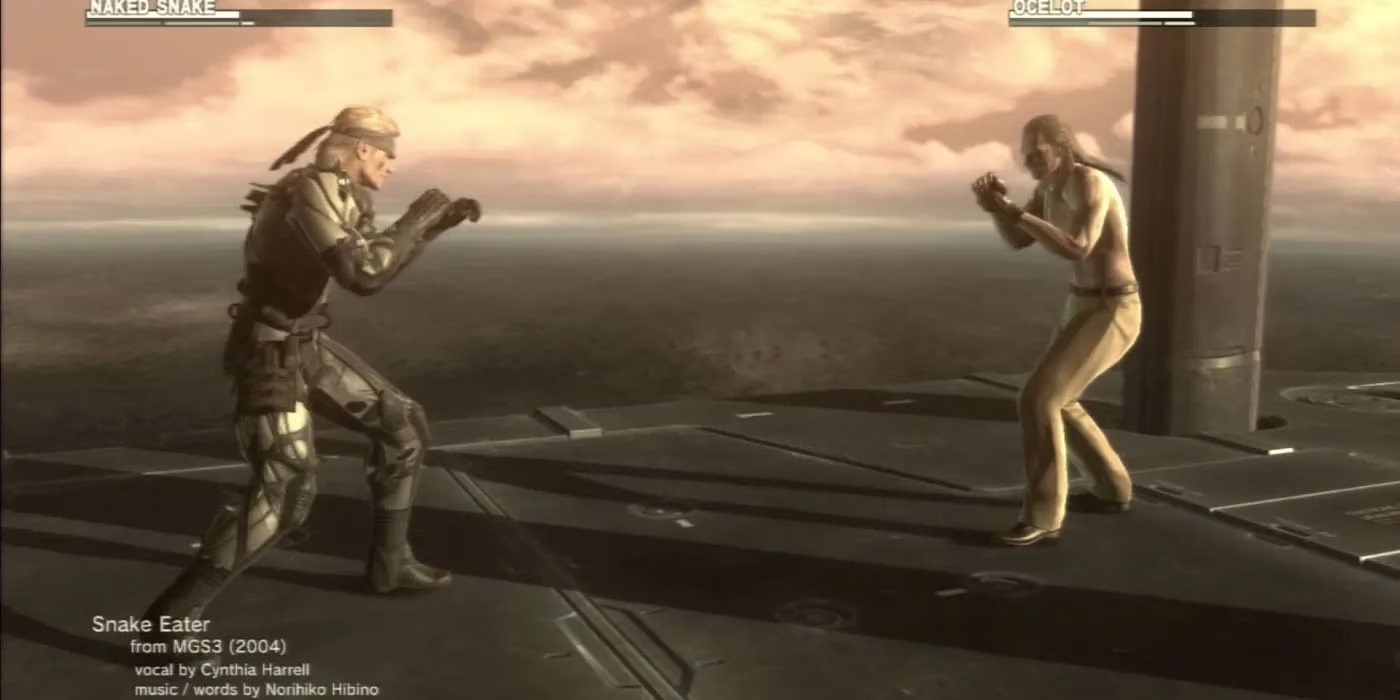
Hideo Kojima’s epic farewell to Solid Snake is a marathon of fan service and melodrama, but when that final act arrives, it delivers one of the most physically draining and emotionally cathartic endings I have ever experienced. As a gamer, I was forced to watch a broken, aging Snake literally crawl through a corridor of irradiated microwaves while a split-screen UI showed his allies fighting for their lives in parallel. My hands were shaking on the thumbsticks because the slow, agonizing progress made me feel every volt of pain. Then the game throws me into a fistfight atop a giant submersible—Liquid Ocelot vs. Old Snake—with the HUD morphing through the logos and health bars of all previous MGS titles. Kojima made me punch my way through nostalgia. Finally, the absurdly long epilogue resurrects Big Boss, tying up decades of lore in a quiet cemetery conversation. It’s a messy masterpiece, but I wept like a child when the credits rolled.
Resident Evil 5
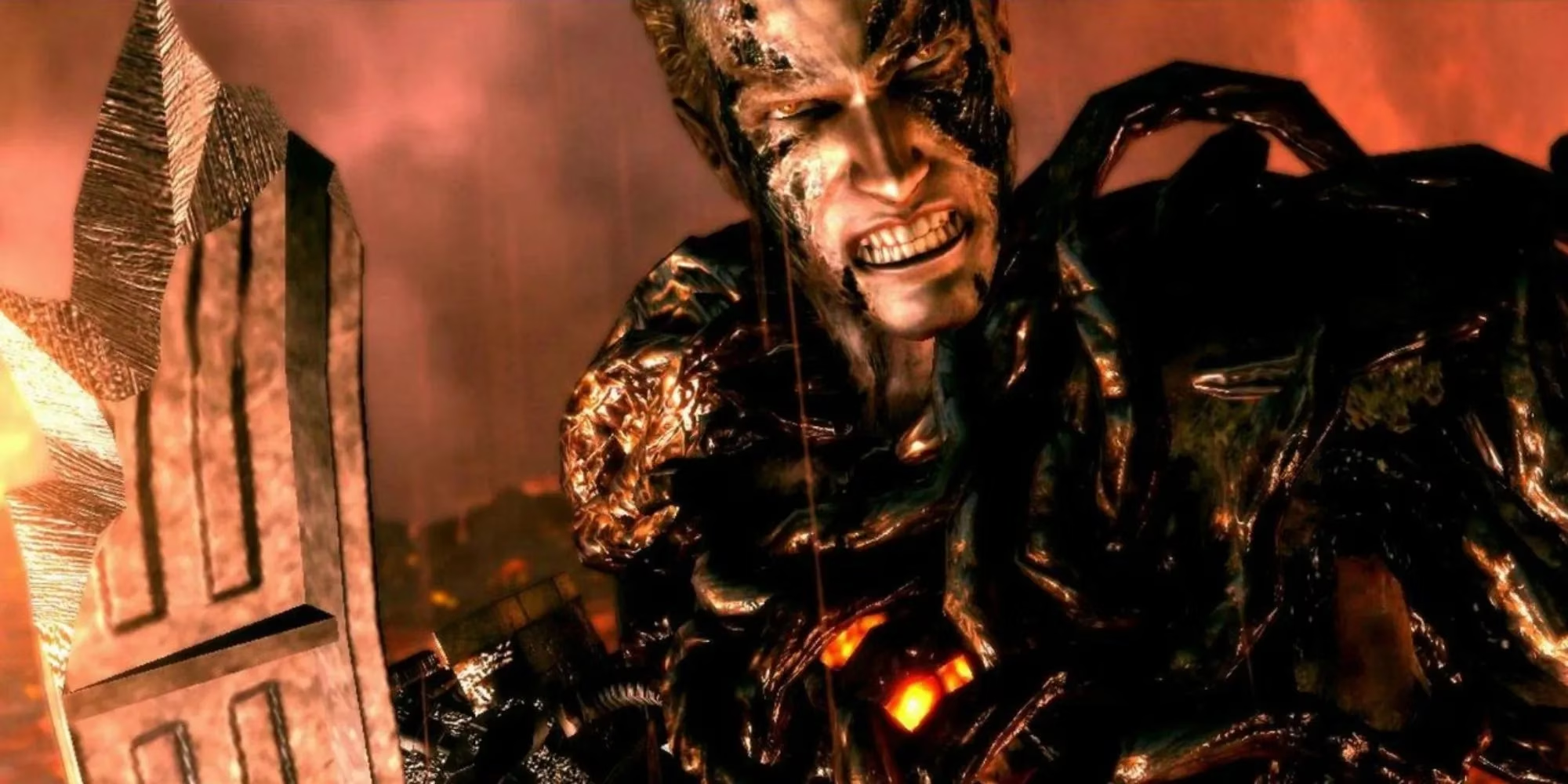
Critics love to debate the shift to action in Resident Evil 5, but few can deny that its final showdown is the most absurdly satisfying boss encounter in the series. After fighting through a Uroboros-infested Wesker in a lab with a countdown timer, I chased him onto a bomber plane, crashed it into a raging volcano, and then—separated from my partner Sheva—I had to punch a massive boulder just to reunite with her. That moment is the definition of camp brilliance. The finale escalates into a double RPG shot into a lava-drenched Wesker, confirming his death with such over-the-top flair that I couldn’t help but laugh and cheer. In 2026, Capcom keeps revisiting the franchise with remakes, but this explosive period still feels like the purest distillation of B-movie joy.
The Last of Us
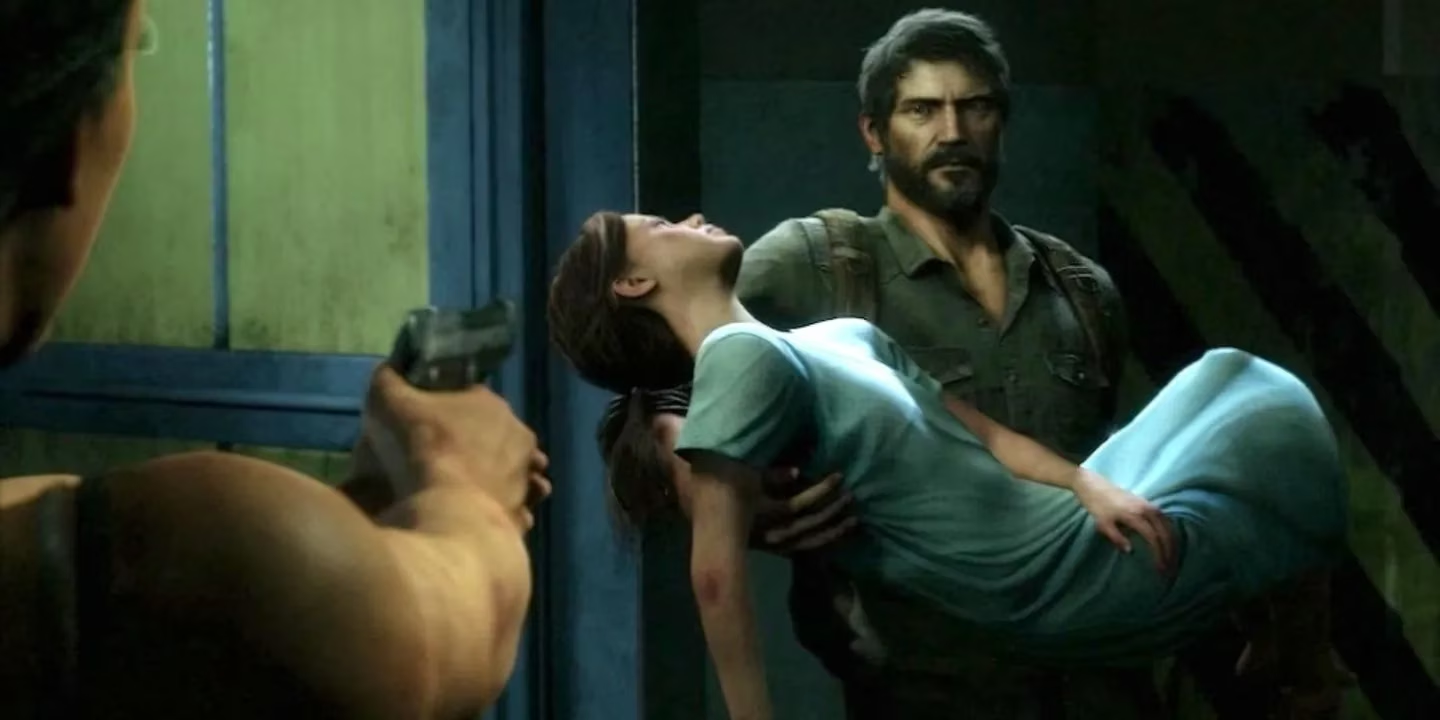
The surgical suite of St. Mary’s Hospital remains one of the most morally devastating arenas in gaming. I had spent more than 15 hours building a father-daughter bond between Joel and Ellie, only to be told that the cure for the Cordyceps infection required her brain tissue. Naughty Dog didn’t give me a cutscene—they handed me a rifle and made me murder Fireflies who had been my allies moments before. I was complicit in Joel’s choice. The final walk to Jackson, with Ellie’s quiet “Okay,” crushed me because I knew the lie would forever taint their relationship. Years later, when The Last of Us Part II and the HBO series re-examined that decision, the weight of this ending only grew, proving that ambiguity can hit harder than any final boss.
Portal 2
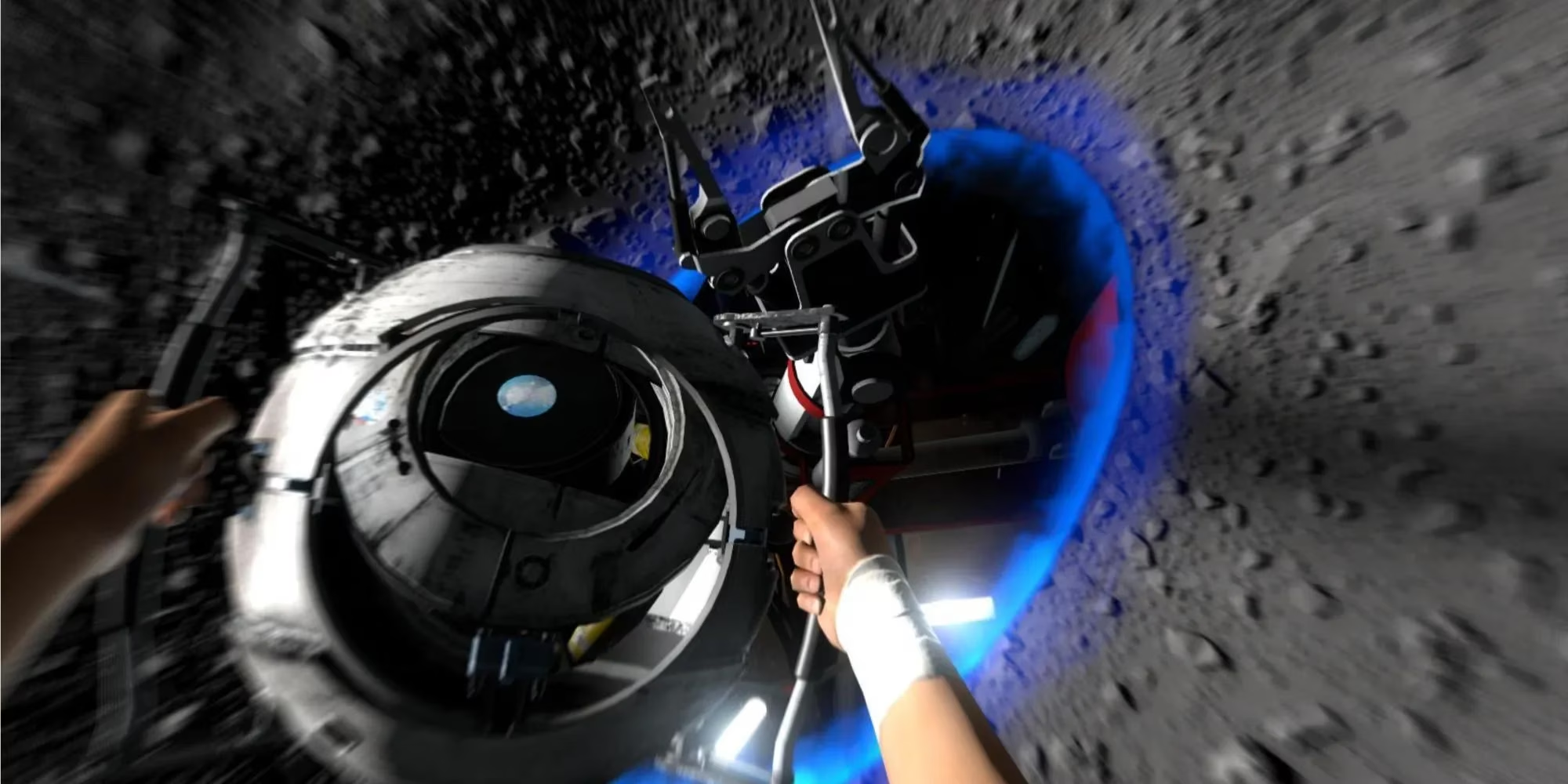
Valve’s genius became apparent in the split-second I realized that the moon could be a viable portal surface. After a hysterical and tense battle against Wheatley, the rogue core, the ceiling collapsed, revealing the lunar surface. Instinct took over. I fired a portal, and suddenly the laws of physics vacuumed me through space. That one shot transformed a puzzle-platformer into a transcendent piece of art. The ensuing ballet with GLaDOS in space, followed by her surprisingly tender farewell and the turret opera, left me grinning like an idiot. Even in 2026, while fans still meme about a never-coming Portal 3, this ending feels like a standalone miracle—no sequel needed.
Red Dead Redemption
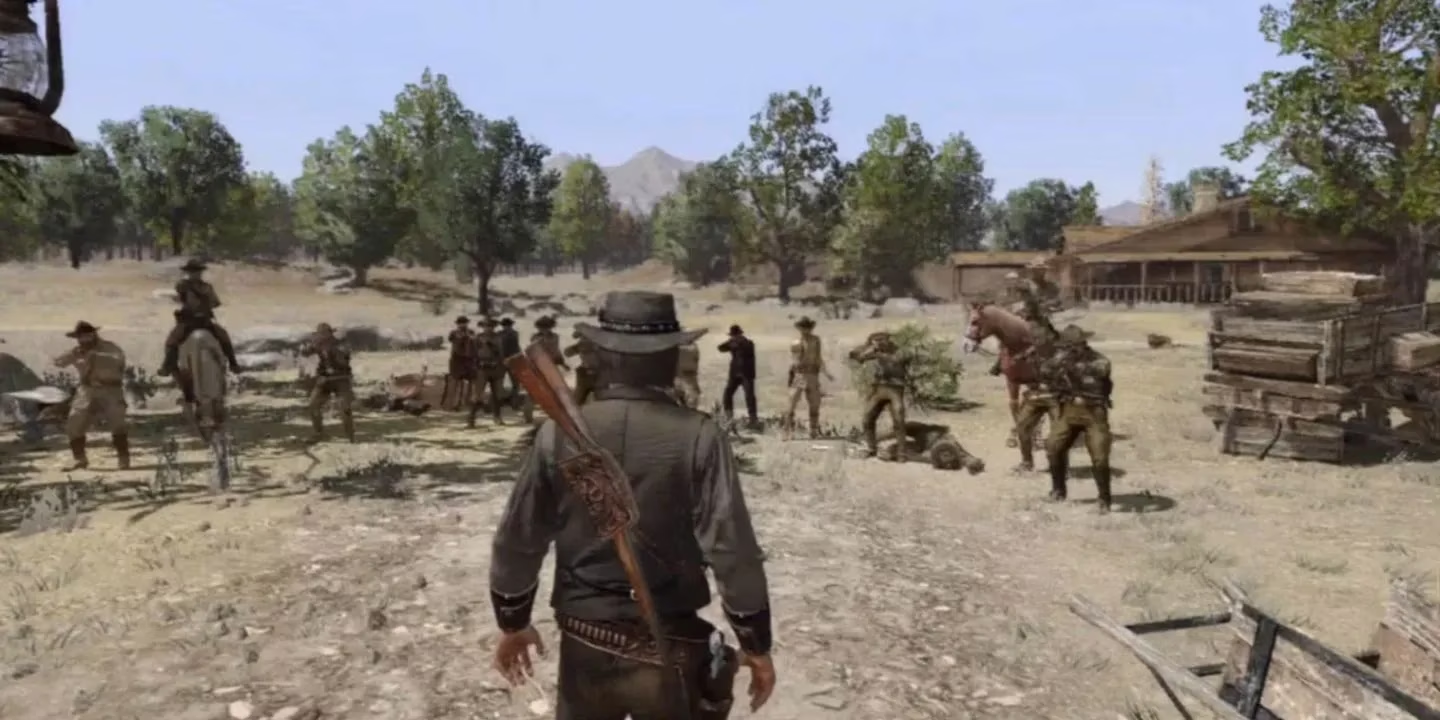
Rockstar taught me that heroic sacrifice doesn’t need to be loud. I spent the game hunting down my former gang for the chance to live peacefully on a ranch with my family. That dream lasted only a few missions before the government agents arrived. When John Marston stepped out of the barn, outnumbered and outgunned, I activated Dead Eye and tried to resist the inevitable. But the game took control, and I watched my protagonist get riddled with bullets. Then the epilogue put me into the boots of his son Jack, years later, on a grey afternoon, facing the man who killed his father. That final duel—and the slow, trembling aim of a boy turned gunman—still haunts me. It’s a cycle of violence dressed as a Western sunset, and it remains Rockstar’s most mature narrative beat.
God of War: Ragnarök
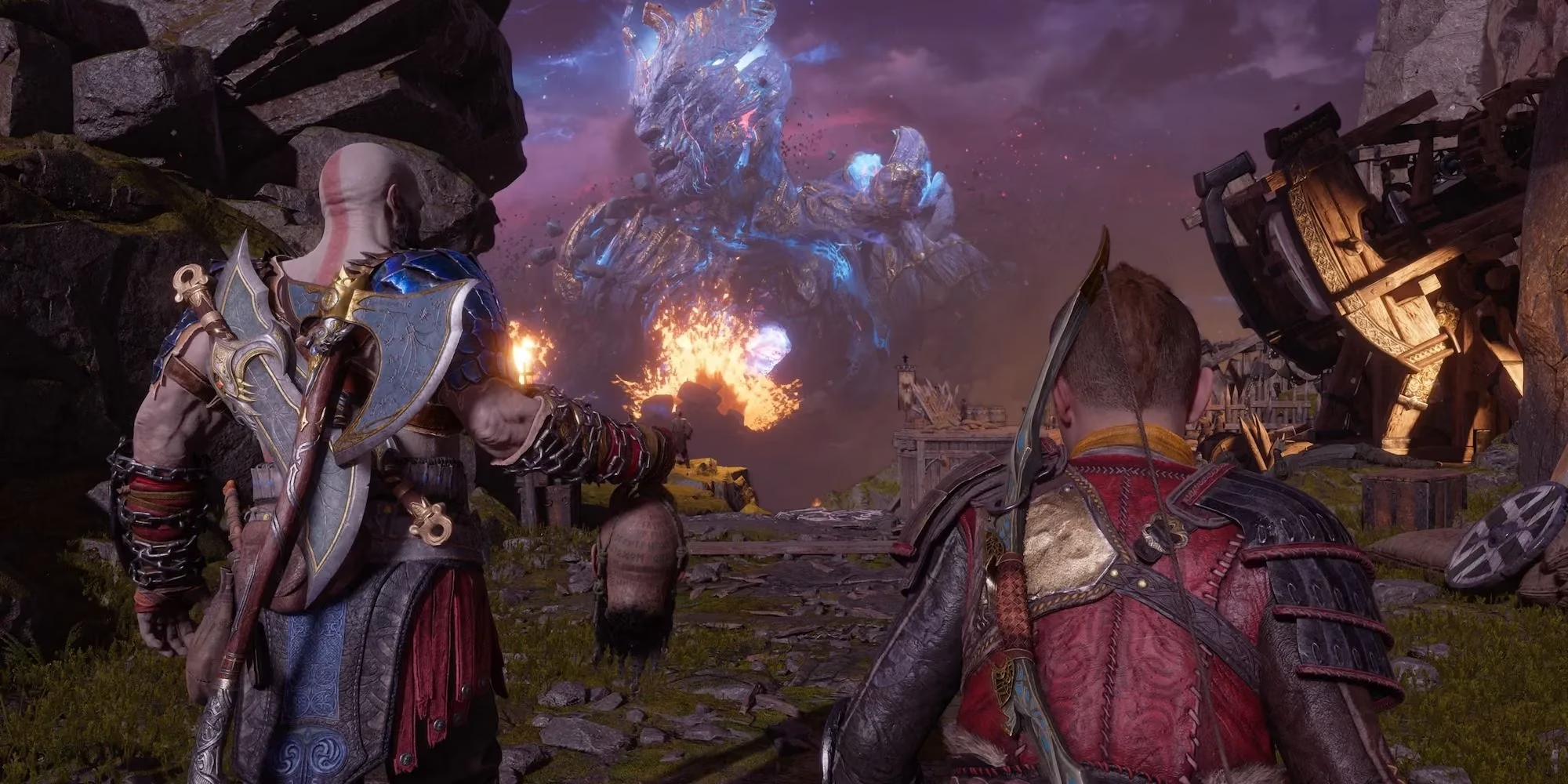
The 2022 sequel compressed an entire mythic arc into one relentless finale. I had spent the game gathering armies, forging the spear Draupnir, and mentoring Atreus, knowing all the while that the prophecy of “death of the father” hung over every moment. When the battle of Ragnarök erupted, I didn’t just watch a cinematic; I was personally commanding fronts, unleashing Spartan rage against Asgardian forces. Santa Monica Studio resolved every dangling thread from the 2018 soft reboot, yet the most powerful moment came after the defeat of Odin, in the quiet of a mourning Faye’s funeral. Kratos’ final line, “I am no longer afraid,” made me realize I had witnessed a god find humanity. As I type this in 2026, with rumors of an Egyptian saga on the horizon, Ragnarök’s ending still feels like a perfect, self-contained closure for the Ghost of Sparta.
Red Dead Redemption 2
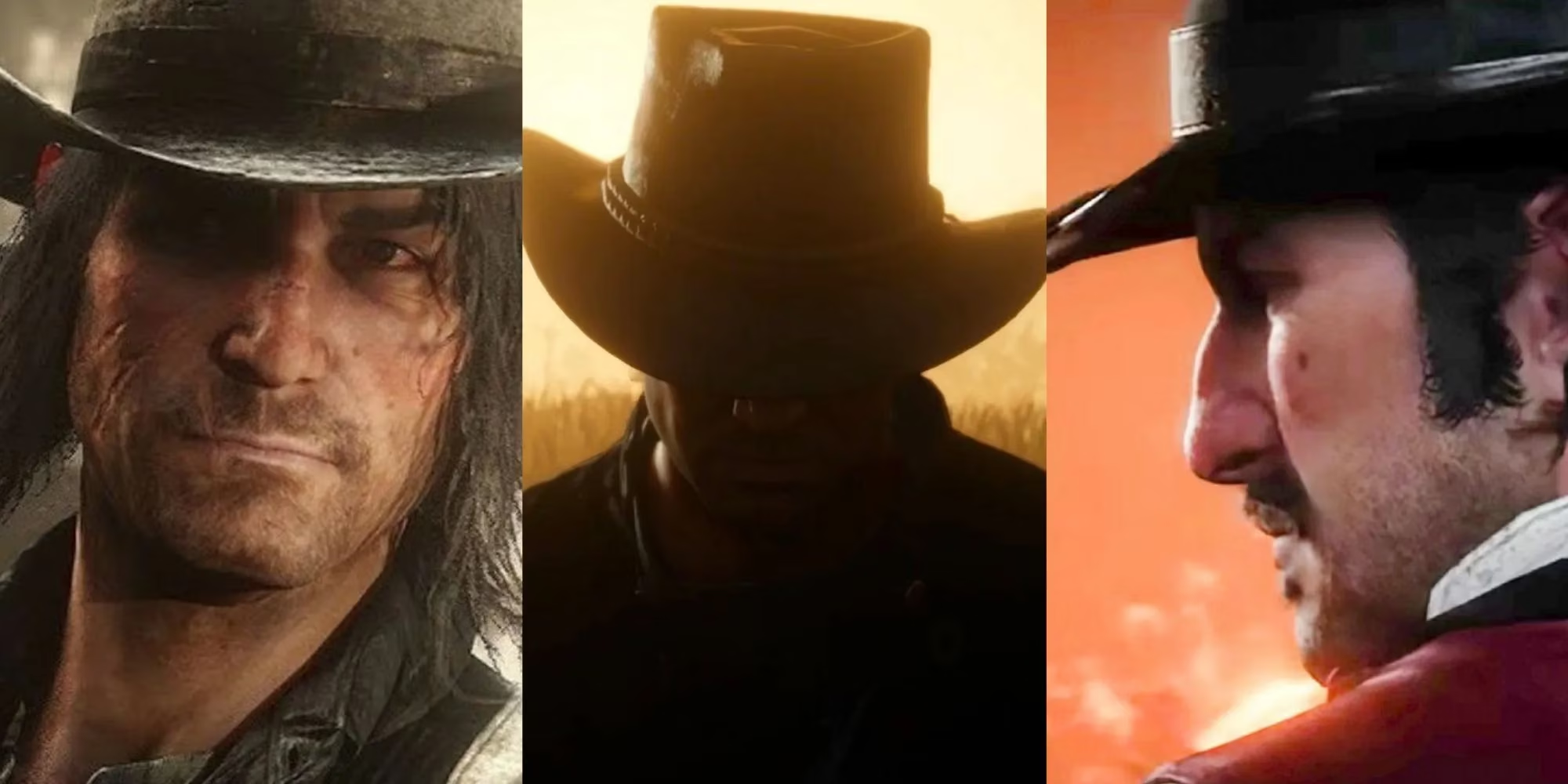
If the first game showed the price of a violent life, the prequel made me live through its slow decay. Arthur Morgan’s tuberculosis consumed him physically while Dutch’s gang crumbled around him. I spent the last chapter desperately trying to secure passages for John, Abigail, and Jack, culminating in a heart-wrenching ride back to camp set to “That’s the Way It Is.” The peak of the mountain showdown, with Arthur choosing to help John escape and confronting Micah, gave me agency in his death—my honor level determined whether I died watching the sunrise or bleeding in a ditch. Dutch’s silent retreat in that final stand told me everything about the hollow shell of a leader he had become. To this day, Arthur’s redemption arc is the benchmark for video game character writing, and I frequently replay those final hours just to feel that catharsis again.
Final Fantasy VII Remake
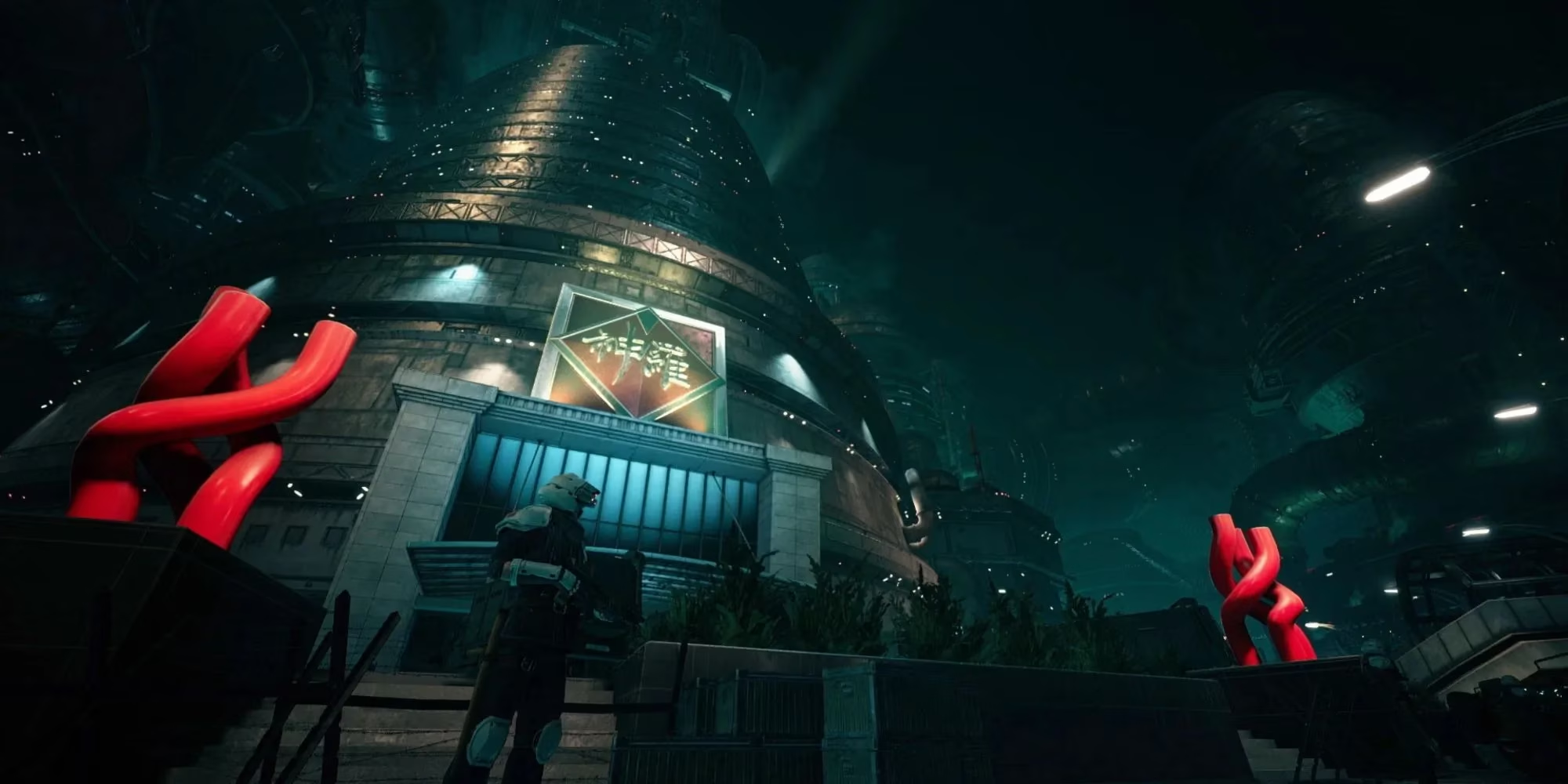
No ending on this list sparked more debate and feverish theorizing than the one that shattered destiny itself. I had been enjoying a lavish, faithful reimagining of Midgar until the whispers—literal arbiters of the original timeline—started appearing. The triumphant raid on the Shinra Headquarters transformed into a mind-bending battle against the Harbinger of Fate. When Cloud and the party defeated it, the story broke free of its 1997 script, showing Zack Fair alive in an alternate timeline and hinting that anything is possible going forward. As the first act of a planned trilogy, it was a audacious cliffhanger that turned my nostalgia into sheer wonder. In 2024’s Rebirth and the upcoming third installment, the consequences of that ending continue to ripple, but I will never forget the moment I realized this wasn’t just a remake—it was a meta-revolution.
These eight paths to closure remind me why I became a professional gamer in the first place. They don’t just conclude; they resonate through fan discussions, YouTube reaction compilations, and quiet nighttime reflections. In an era of endless service games, these expertly crafted moments remind us that an unforgettable ending is the ultimate player reward. I can only hope that the titles of the next decade will dare to swing as big, risk as much, and make us feel as deeply as these masterpieces did.
Comments