
Games Where Your Morality Shapes a Virtual World
Exploring compelling moral choices and immersive karma systems, games like Dishonored and The Banner Saga offer thrilling, heart-wrenching experiences that shape unforgettable digital worlds.
Let's be real, as a player who's been around the block a few times, nothing quite tickles my fancy like a game that makes me question my own soul. Being told to save the world is one thing, but choosing to do it, or maybe, just maybe, deciding to watch it burn from the comfort of my villainous lair? That's where the magic happens. It's 2026, and while we've got neural implants and hyper-realistic VR on the horizon, the timeless thrill of a moral quandary in a digital world hasn't gotten old. Some folks want to be the shining beacon of hope, others want to explore the murky depths of depravity, and I'm here for all of it. The best games don't just track your karma with a boring number—they bake your choices into the very fabric of their worlds, and the results can be hilarious, heartbreaking, or downright terrifying.

Take Dishonored, for instance. This game is a masterclass in environmental storytelling. You think you can just sneak around and shank a few guards? Think again! The game is watching. Every violent outburst, every messy assassination, it all adds up. Before you know it, the city itself turns against you. 😱 The streets become overrun with swarms of rats (more than usual, anyway), the guards get angrier and more numerous, and a general sense of despair hangs in the air. It's like the game world is giving you the ultimate side-eye for your bad behavior. A low-chaos playthrough, on the other hand, feels cleaner, brighter, and altogether more hopeful. The game doesn't need a morality meter; you can see and feel your karma in every rain-slicked cobblestone.
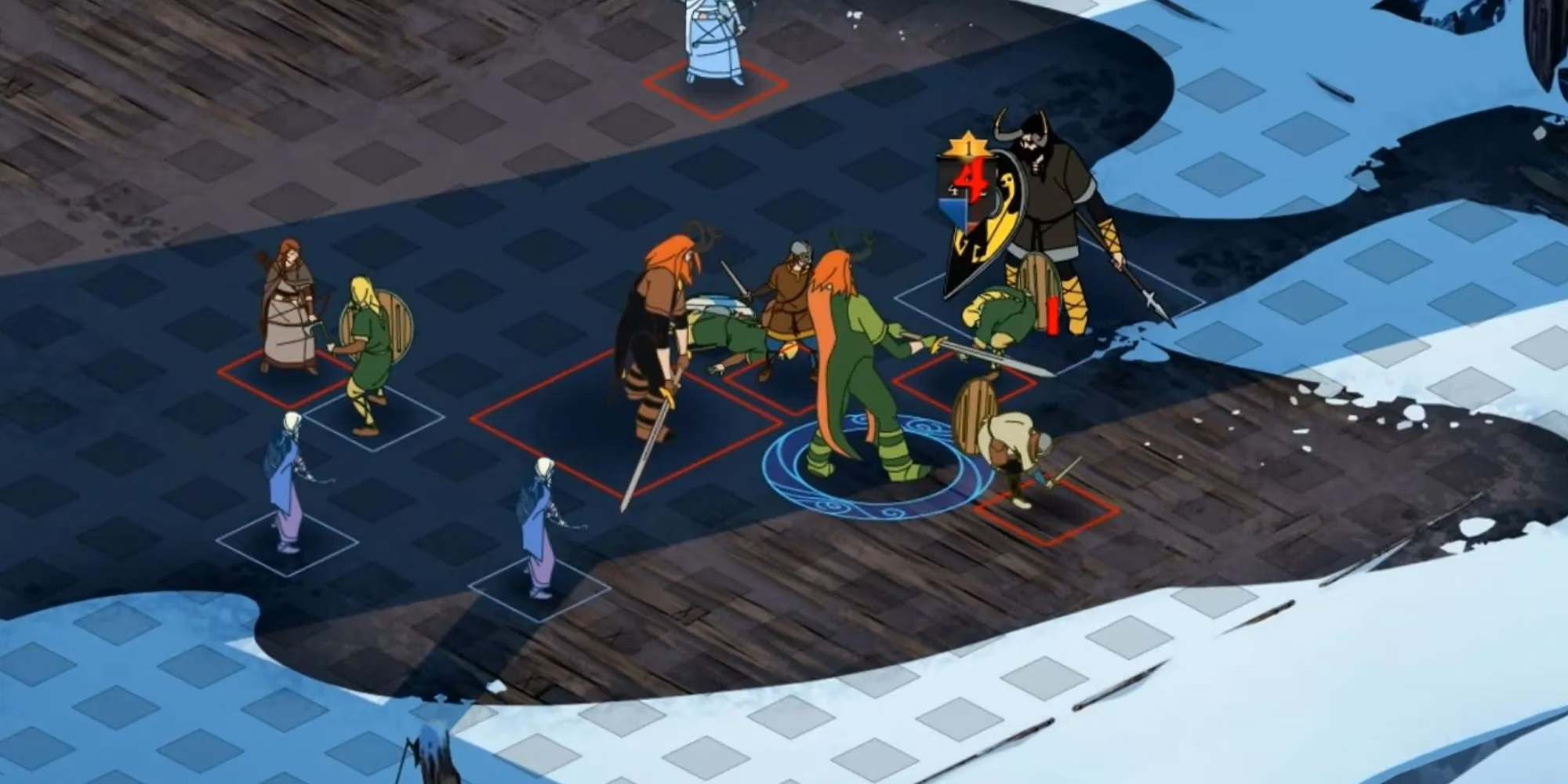
Now, if you want a game that turns morality into a precious resource you have to manage like gold or food, look no further than The Banner Saga. This beautiful, brutal Viking-esque RPG isn't just about turn-based combat; it's about leading a desperate caravan to safety. And let me tell you, keeping morale high is a full-time job. Your choices here are brutal and often have no good answer. Do you sacrifice supplies to help refugees, or hoard them for your own people? Every decision chips away at your party's spirit. Low morale means your fighters are sluggish in battle, your travelers move slower on the map, and everything just feels... heavier. It's a constant, heart-wrenching balancing act between doing what's necessary and doing what's right. The pressure is real!
Speaking of pressure, remember the classic Vampire: The Masquerade - Bloodlines? Even in 2026, with the long-awaited sequel finally here, the original's 'Humanity' system remains iconic. You're not just tracking good and evil; you're tracking how much of your human soul you've got left before you become a ravenous monster. Succumb to your bloodlust, treat humans like cattle, make selfish, cruel choices—and watch that Humanity stat plummet. The lower it goes, the harder it is to resist your beastial nature, and the more the world recoils from you. It's a brilliant way to mechanize the inner struggle of being a vampire. Staying 'good' is a conscious, difficult effort, making every act of restraint feel like a major victory.
Of course, some games like to wear their morality on their sleeve—literally. The Fable series has always been famous for this. Be a paragon of virtue, and you'll literally grow a halo, attract butterflies, and have people singing your praises. Go full dark side? Enjoy your new horns, glowing red eyes, and the smell of sulfur that follows you everywhere. It's a wonderfully over-the-top system that makes your alignment impossible to ignore. Your appearance becomes a walking billboard for your life choices, and it's both hilarious and deeply satisfying to see your angelic (or demonic) transformation unfold.
No discussion of in-game morality is complete without Commander Shepard. The Mass Effect series' Paragon/Renegade system is legendary. It's not just about being nice or mean; it's about your approach to saving the galaxy. Paragon Shepard inspires through diplomacy and unity. Renegade Shepard gets the job done through intimidation and ruthless pragmatism. What's brilliant is how it locks certain narrative outcomes and dialogue options. You can't suddenly play nice after a lifetime of being a space jerk—the game remembers. Your journey feels cohesive, and the weight of your reputation opens or closes doors in a way that feels completely organic.
For a more cosmic take on good and evil, Star Wars: Knights of the Old Republic delivers the quintessential Jedi experience. Your actions pull you towards the Light or Dark Side of the Force, and the game doesn't pull its punches. Help everyone you meet, show mercy, uphold justice? Welcome to the Light Side, with all its serene, healing powers. Give in to anger, greed, and fear? The Dark Side offers raw, destructive power, but at a terrible cost to your soul and your companions' trust. It's a fantastic simulation of the Star Wars ethos, making you feel the seductive pull of power versus the disciplined path of peace.
The Pathfinder RPG games (like Wrath of the Righteous) take this a step further with a full-blown Alignment Chart. You know the one: Lawful Good, Chaotic Evil, Neutral, and all the wonderful shades in between. This isn't just flavor text. Your alignment determines which Mythic Path you can ascend to—will you become a celestial Angel, a ruthless Lich, a primal Demon, or something else entirely? This choice radically alters your abilities, how every faction and NPC interacts with you, and can even change the ending of the game. It's a deep, complex system that truly makes your moral philosophy the core of your power fantasy.
Stepping away from pure fantasy, Red Dead Redemption 2 gives us the 'Honor' system. As Arthur Morgan, you're an outlaw, but what kind of outlaw are you? You can help strangers, be polite in town, and generally try to be a decent man in an indecent time. Or, you can rob, murder, and terrorize your way across the frontier. Your Honor level changes dialogue, mission availability, and even the game's final moments in profoundly moving ways. NPCs will greet you warmly or flee in terror. It's a subtle, powerful system that makes the wild west feel alive and reactive to your brand of 'justice'.
Finally, we have the king of moral ambiguity: Fallout: New Vegas. This game understood that 'good' and 'evil' are often matters of perspective. Sure, it has a Karma system, but the real genius is the Faction Reputation system. You can be a saint to the followers of the King and a devil to Caesar's Legion—all at the same time! 😅 Helping one group often means harming another. The world doesn't see you in black and white; it sees you through a dozen different, often conflicting, lenses. This creates a fantastically gray world where every choice has unintended consequences and loyalties are constantly tested. It remains, in my opinion, one of the most sophisticated moral playgrounds ever coded.
So there you have it. From cities rotting with your misdeeds to literal halos and horns, these games prove that the most compelling stories are the ones we write ourselves, one morally questionable (or virtuous) decision at a time. The consequences make the journey unforgettable.
Comments