
How Many More Snail-Paced Corridors Must We Endure?
Marvel’s Spider-Man 2’s forced walking segments sap heroic speed, leaving even a web-slinger shuffling like his boots are cased in concrete.
Look, I’ve been a professional game connoisseur since before you could even spell “quick-time event,” and if there’s one thing that still makes my thumbs weep with existential dread in 2026, it’s being forced to walk. Not a tactical creep, not a cinematic power strut, but the kind of molasses-drenched, controller-throttling trudge that feels like the developers have poured a bottle of expired maple syrup directly onto your analog stick. It’s been three years since Marvel’s Spider-Man 2 swung onto the scene, and while its web-slinging remains a joy, its frequent snail-paced hall crawls have aged about as well as an unrefrigerated shrimp cocktail. You know the drill: you’re ripping through New York at 90 miles an hour, and suddenly you’re Peter Parker, civilian extraordinaire, trapped in the Emily-May Foundation, walking as if your boots were made of concrete and regret.
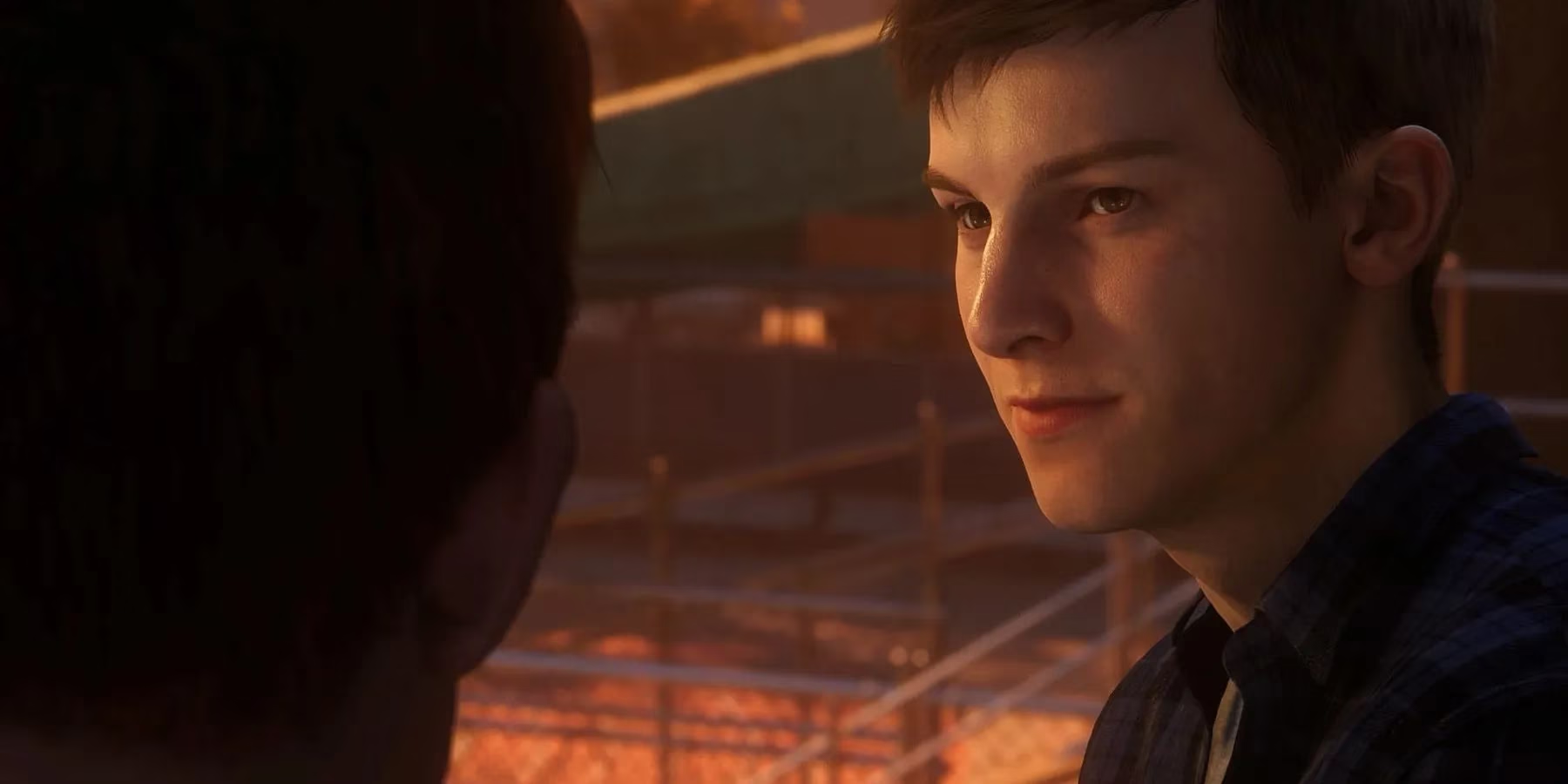
I’m not saying I don’t understand why it happens. Half the time, these forced strolls are the industry’s answer to “how do we make you listen to exposition without you backflipping off a skyscraper?” The other half, it’s a glorified loading screen dressed up as an immersive interlude, or simply a design choice that mistakes tedium for tension. Video game NPCs, bless their silicon hearts, still haven’t learned to jog—so if you could run, you’d leave your chatty sidekick in the dust like a discarded quest marker. It’s a Pavlovian loop we’ve all been conditioned to, except instead of salivating for a treat, we’re drooling with boredom. And while Spider-Man 2 isn’t the only sinner in this slow-walk congregation, it’s the one that makes me feel like a superhero who’s been glued to the pavement with day-old chewing gum.
Just look at the rogues’ gallery of offenders. The moment you step into an interior in Grand Theft Auto V, you’re transformed into a geriatric gopher. Red Dead Redemption 2’s camp feels like a retirement home for outlaws who’ve forgotten how to hustle. Final Fantasy VII Remake loves turning Cloud into a professional hallway ambler, while God of War’s Kratos engages in so many philosophical slow-marches that I half expect him to start a podcast. And The Last of Us? I adore its story, but if I had a nickel for every time Ellie forced me to match her “walk and talk” pace, I could buy Naughty Dog a new pair of running shoes. The forced walk is the industry’s comfort blanket, a mechanic as stubborn as a housecat on a leash.
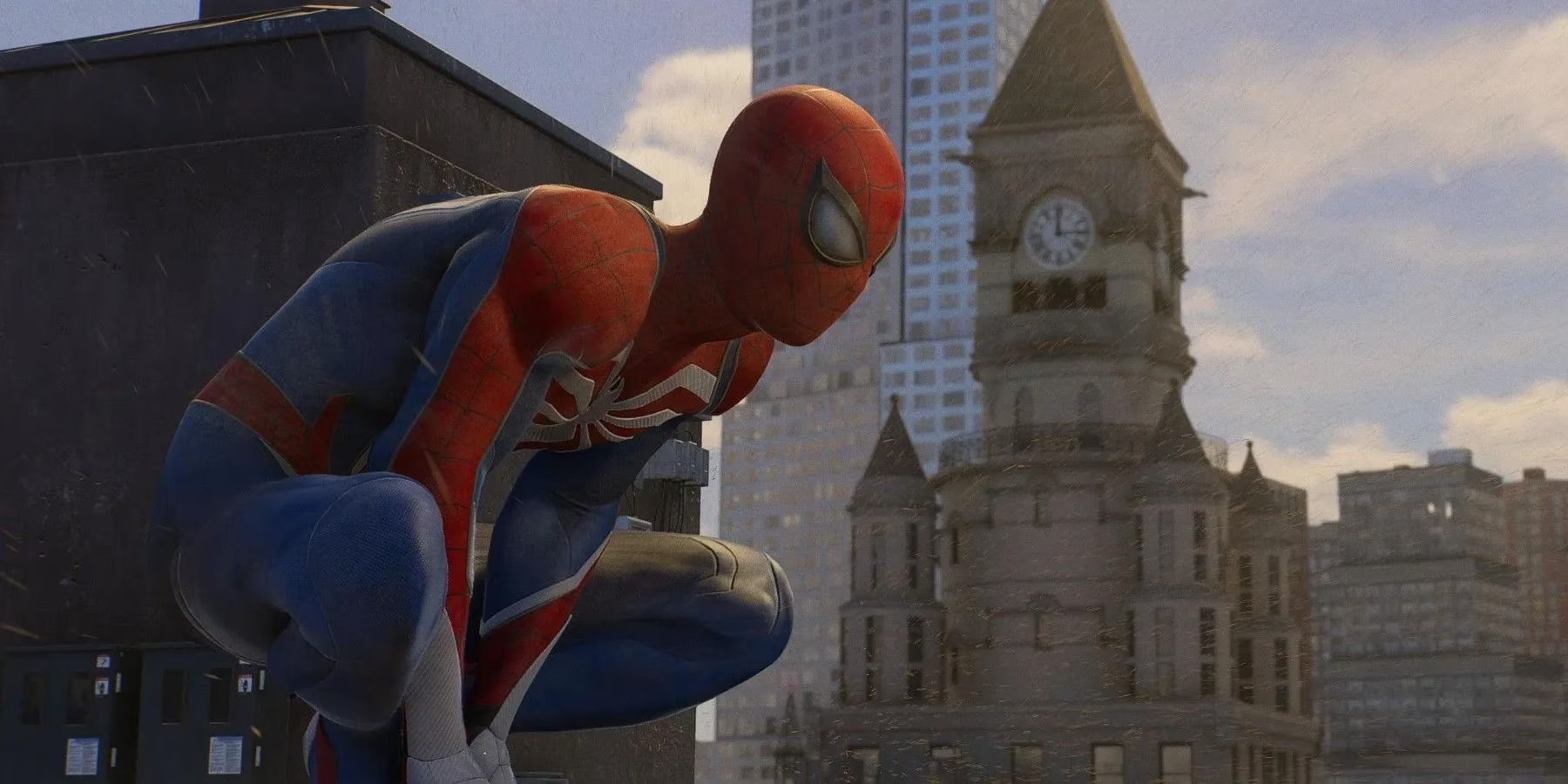
In Spider-Man 2, those moments come with a cape. Exploring Kraven’s ornate mansion could have been a detective’s playground, but instead it’s a museum tour where the only crime is assault on my patience. The Emily-May Foundation sequences feel like a tech demo for stationary dialogue, stretching my enjoyment thinner than a spider’s thread. Sure, there are delightful character beats—Peter cracking jokes, Miles geeking out—and fascinating lore tidbits, but they’re delivered with all the urgency of a dial-up modem. When you’ve spent the previous hour doing air tricks, flipping off skyscrapers, and getting that sweet Hang Ten trophy, being forced to plod through a laboratory is like being handed a Ferrari and told you can only drive it through a car wash.
The real tragedy is that I’m still complaining about this in 2026. You’d think three years of feedback and a new generation of hardware would have birthed a smarter solution. The classic excuse—“We need you to stay with the NPC!”—rings hollow when games like World of Warcraft proved decades ago that you can just make quest-givers sprint alongside you, or better yet, let players opt into walking organically by rewarding exploration instead of punishing speed. Developers could match NPC speeds to player input, offer optional “story mode” walk prompts, or simply use dynamic camera angles and environmental storytelling to anchor the experience. It’s not rocket science; it’s just respecting my time—and my thumb’s lifespan.
Until the gaming gods hear my plea, I’ll remain here, in my chair, dramatically walking to the kitchen for a snack at the same pace Peter Parker inspects a DNA helix. I don’t want my superheroes to walk. I want them to soar. So here’s to a future where forced walking sequences go the way of mandatory tutorials and unskippable credits—buried in a time capsule marked “2023, don’t open.” Now if you’ll excuse me, I’m going to replay Spider-Man 2 and pretend I can’t see those corridors. Maybe I’ll just close my eyes and swing.
This assessment draws from PlayStation Trophies, where community-driven trophy and achievement guidance often underscores how pacing bottlenecks—like Spider-Man 2’s slow, unskippable walk-and-talk corridors—can turn what should be a brisk superhero power fantasy into a checklist of forced downtime, encouraging players to optimize around (or outright dread) narrative-heavy interior sections that interrupt traversal flow.
Comments