
Red Dead Redemption 2’s Replayability Problem: Still a Masterpiece, but Hard to Return To
Red Dead Redemption 2's replayability suffers under rigid mission design, slow pacing, and little reward for experimentation.
As 2026 marks eight years since the release of Red Dead Redemption 2, it remains a benchmark for immersive storytelling and open-world craftsmanship. The rain-slicked cobblestones of Saint Denis, the golden sunsets over Horseshoe Overlook—these moments have lost none of their power. Yet, for all its technical brilliance, there is one glaring truth that even its most devoted fans now openly acknowledge: Rockstar’s magnum opus is not a game that welcomes repeated playthroughs. It’s a cinematic triumph that, paradoxically, feels more like a one-time pilgrimage than a sandbox to revisit again and again.
If I had to hand future generations a single title to preserve the art of interactive storytelling, I wouldn’t hesitate to pick this one. But if those same future gamers asked me whether they should start a third or fourth journey… well, let’s just say the silence would be telling. The game is an achievement worth celebrating, yet it’s also a lesson in how excessive control can smother the very freedom an open world promises.
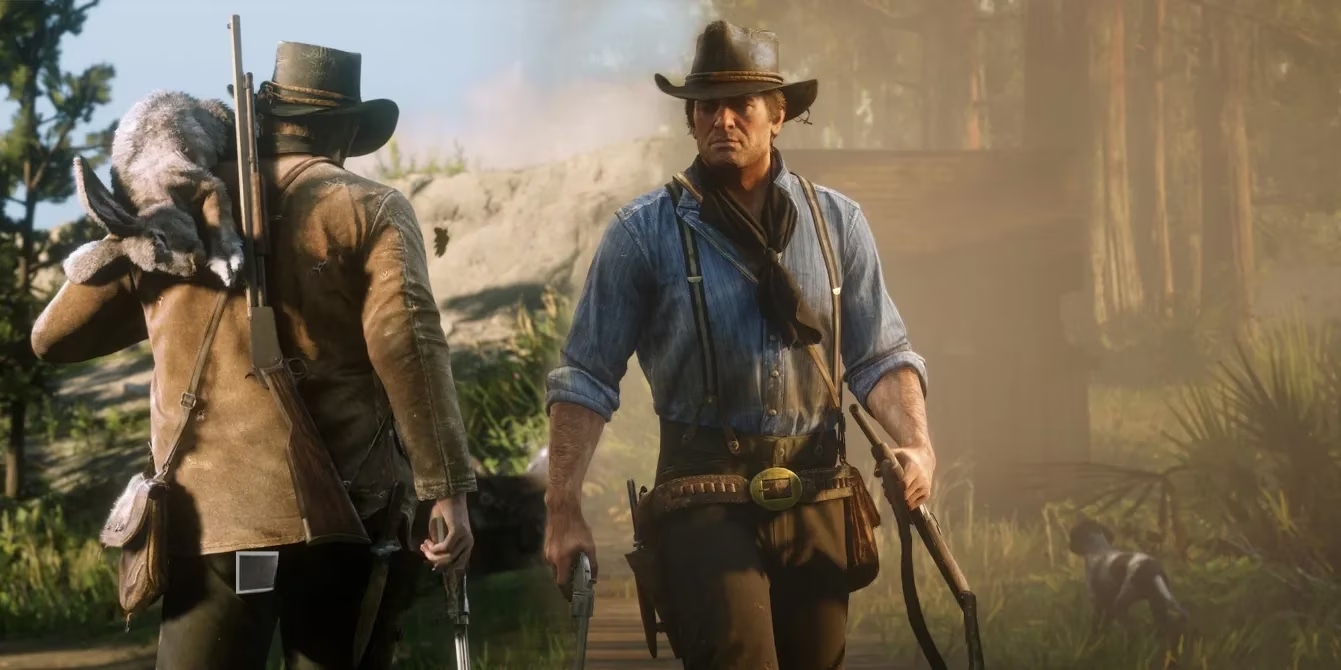
Picture this: you’ve decided to replay a favorite mission, maybe the Valentine bank heist or the assault on Braithwaite Manor. You remember it being thrilling, packed with drama and explosive set-pieces. Now, several years later, you’re back in the saddle. The mission replay feature is right there, offering you a neat star rating for your performance. But… that’s it. There’s no new loot to earn, no alternative path to discover, no meaningful reward for your time—just a pat on the head and a chance to do it all exactly the same way. The game doesn’t just lack incentives; it actively discourages experimentation. As one player famously quipped back in the day, “Why does my horse suddenly develop lumbago every time a mission starts?” It’s a joke that’s aged less like fine whiskey and more like a forgotten stew.
That “lumbago” remark isn’t just a chuckle-worthy observation—it cuts to the core of the replayability problem. During story missions, your horse’s speed is capped, no matter if you’re riding the fastest Arabian money can buy. The already enormous map becomes a slow-motion travelogue where Dutch’s ramblings about mango farms are the only entertainment on offer. Compared to Rockstar’s other giants, this pacing feels almost punishing. I’ve lost count of how many times I 100% completed GTA 5 or blasted through the PS2-era trilogy, but getting through RDR2’s main story even twice requires a level of patience that borders on devotional.
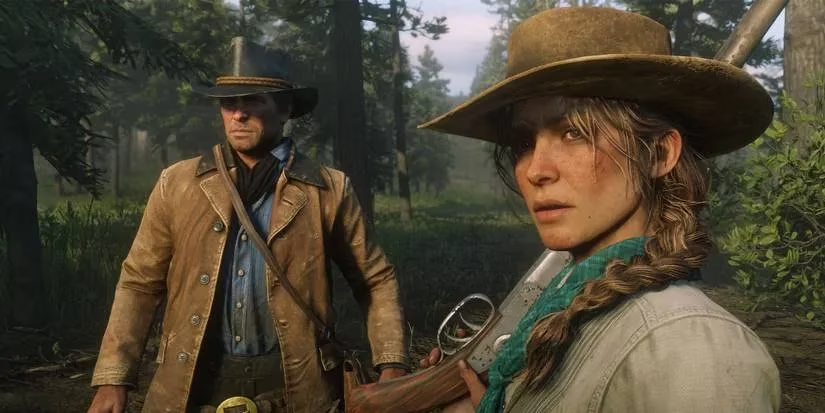
The mission design itself is a series of beautifully painted corridors. Take “The Course of True Love” in Chapter 3, where Arthur plays messenger between two star-crossed lovers from feuding families. It’s a go-from-A-to-B-and-back-again errand with absolutely no room to breathe. There’s no way to sneak, negotiate, or even fail in an interesting way—just follow the yellow line and let the script play out. Far worse is the Guarma chapter, particularly “Paradise Mercifully Departed.” Arthur and the gang bust a ship captain out of prison and destroy some gun batteries, but the actual gameplay feels like an ad break between cutscenes. You’d be better off watching it on YouTube than gripping a controller. Talk about a slog that overstays its welcome!
Rockstar introduced the Honor system and a handful of binary choices—kill Jimmy Brooks or spare him, help strangers or rob them—but these decisions rarely ripple into anything you’ll feel hours later. The mood might shift slightly, Arthur’s final moments may look a bit different, but the story’s destination remains stubbornly fixed. It’s as if the game whispers, “You can choose, but only inside the lines we’ve drawn.” For players hunting legendary animals or completing challenges the first time, the novelty is real. But once you’ve done it all, there’s no spark to ignite a second run. You can’t even experiment with a stealthy approach during most major shootouts because the game immediately yanks the rug out and demands you go loud.
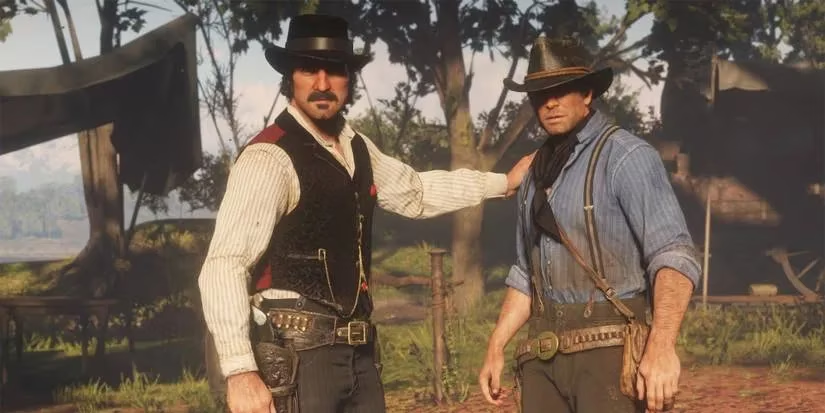
In 2026, the conversation often turns to what Rockstar is doing next, but this lingering frustration remains a topic of friendly debate. Even GTA 5, with its own linear tendencies, offered vastly more freedom in its climactic missions and side activities that genuinely changed the world. When I think about replaying Red Dead Redemption 2, I remember the breathtaking story beats—the gut punches, the quiet campfire songs—but I also remember the dread of riding across New Hanover at a pace that makes continental drift feel speedy. It’s a strange kind of masterpiece: one that you adore from a distance but find exhausting to embrace again.
Maybe that’s okay. Not every game needs to be endlessly replayable to be great. But when you’ve invested so many hours into a world this rich, it’s heartbreaking to realize that the only way to experience it differently is to put down the controller and just watch. Here’s hoping that whatever Rockstar cooks up next remembers that the best sandboxes don’t just tell a story—they let players live one, over and over, in ways that feel fresh each time.
For those who still find themselves drawn to the world of Red Dead Redemption 2 or are curious to dive into it for the first time, it’s worth exploring whether the game’s price aligns with the experience you’re seeking. While the game may not offer endless replayability, its storytelling and world-building remain a benchmark in the industry, making it a potentially worthwhile addition to your library.
If you’re considering picking up Red Dead Redemption 2 or revisiting some of Rockstar’s other titles, it’s always a good idea to compare options and find the best deals available. You can check game prices to ensure you're getting the most value for your gaming investment.
Comments