
When Games Suddenly Change Genres: 6 Levels That Feel Like Different Games
Discover the most iconic genre-bending levels in gaming, where developers masterfully surprise players with unexpected twists and unforgettable gameplay shifts.
As a lifelong gamer, I've played countless titles across every genre imaginable. One thing I've noticed over the years? Game developers absolutely love throwing curveballs at us! 🎮 Most games establish a certain rhythm—you know what to expect from a Call of Duty campaign or a Mario platformer. But sometimes, out of nowhere, a game will drop a level that feels like it was ripped straight from a completely different title. It's disorienting, surprising, and honestly, one of the coolest things in gaming. Let me break down six of the most iconic genre-bending levels that made me double-check I hadn't accidentally switched games.
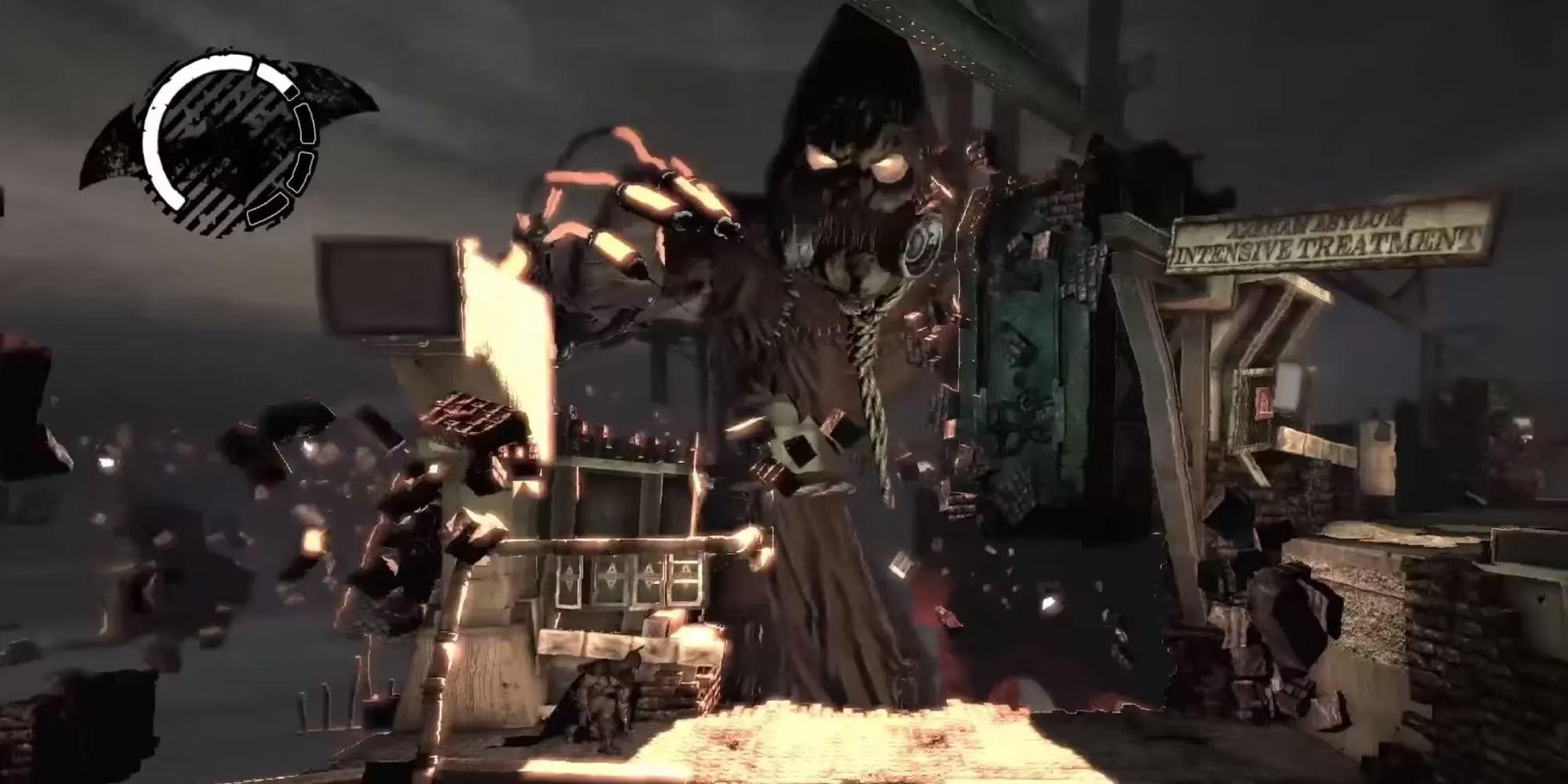
Let's start with a classic mind-bender. Batman: Arkham Asylum is a masterclass in Metroidvania-style action. You're the goddamn Batman, gliding through corridors and delivering justice with your fists. Then you meet Scarecrow. 💀
Boom! The game transforms. These "nightmare" sequences ditch the free-flow combat and detective vision for pure, surreal psychological horror. Suddenly, you're not in control anymore. You're tiny, vulnerable, and trapped in a twisted landscape where a giant Scarecrow can end you in an instant. You can't punch your way out—you have to hide, survive, and wait for the toxin to wear off. The aesthetic shifts to something straight out of Silent Hill or Resident Evil. The familiar asylum architecture warps, replaced by gothic, impossible geometry and haunting imagery. It's a brilliant, terrifying detour that proves even the Dark Knight has fears he can't just beat up.
Speaking of horror where it doesn't belong, let's talk about Cyberpunk 2077: Phantom Liberty. Night City is all about chrome, style, and chaotic action-RPG gameplay. Then you play the mission "Somewhat Damaged" if you side with Solomon Reed (Idris Elba's character).
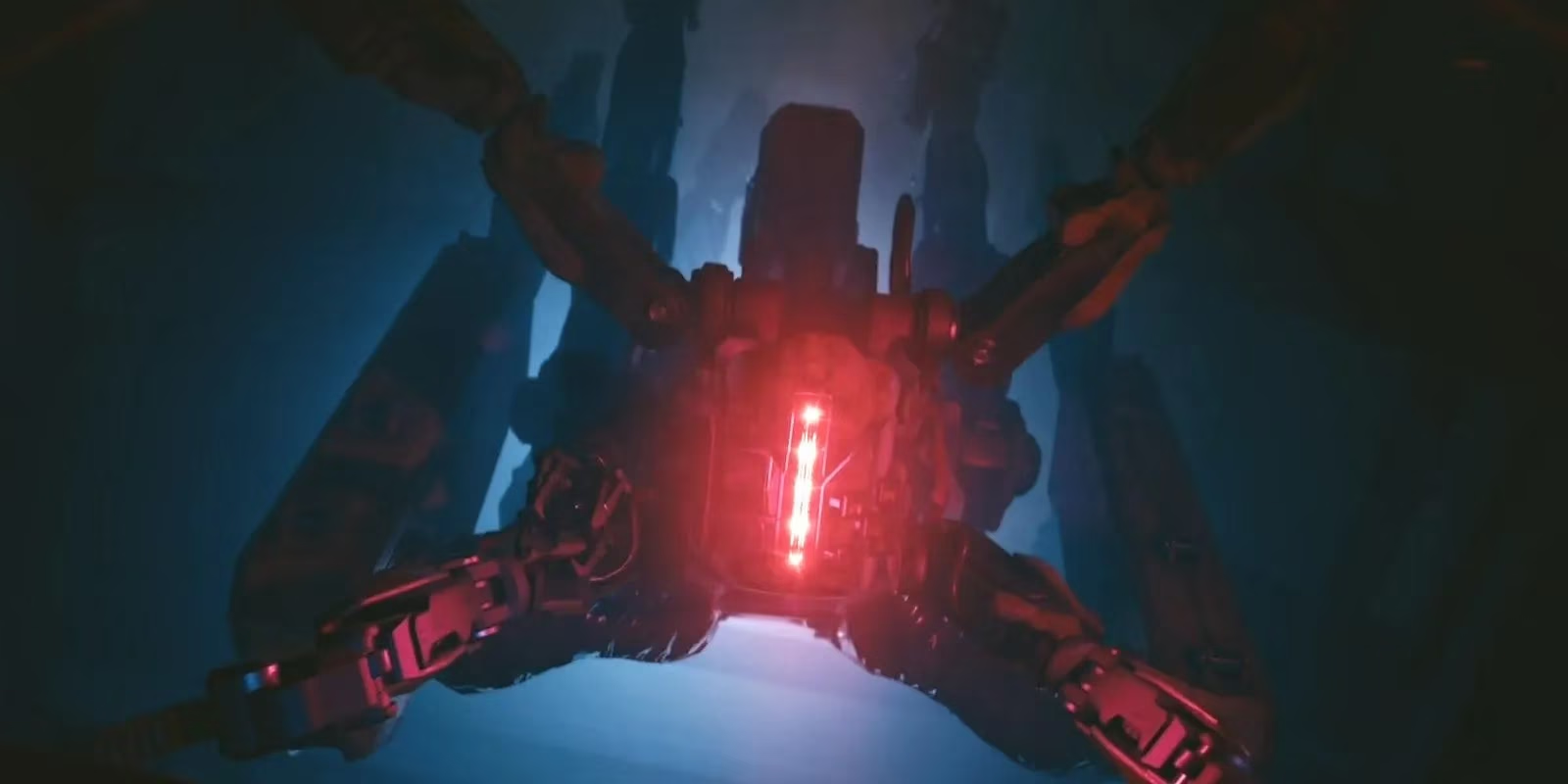
Forget about your legendary smart weapons or Sandevistan. This mission locks you in a derelict, pitch-black facility with the Cerberus robot—a relentless, unkillable hunter. Your objective? Evade. Survive. The power dynamic flips entirely. You're no longer a legendary merc; you're prey. The gameplay instantly becomes a tense game of cat-and-mouse, relying on stealth, sound, and environmental awareness. The atmosphere is dripping with dread, and the level design—claustrophobic corridors, flickering lights, industrial decay—is a dead ringer for Alien: Isolation. It was such a stark, brilliant departure from the base game's power fantasy that it became one of the DLC's most memorable moments.
Now for one of the most famous genre shifts in gaming history: Ravenholm in Half-Life 2. For the first few chapters, you're fighting a guerrilla war against the oppressive Combine in the dystopian City 17. It's a sci-fi shooter with political undertones. Then you take a train to Ravenholm. 🚂
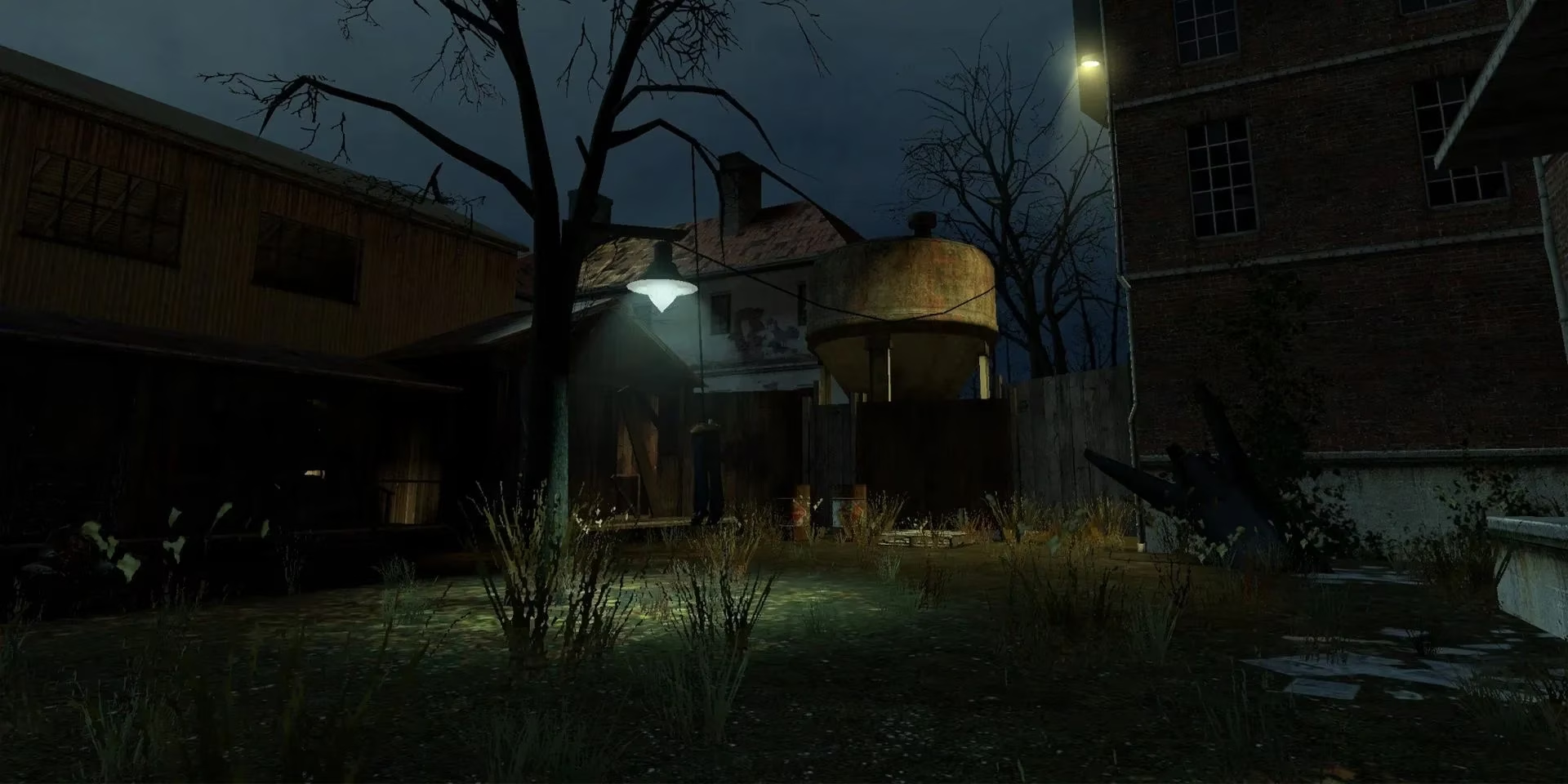
Welcome to survival horror, Mr. Freeman. The Combine soldiers vanish, replaced by shambling zombies and lethal Headcrabs. The soundtrack turns eerie, the environment becomes a corpse-strewn nightmare, and your best friends are the Gravity Gun and environmental traps (saw blades, yes!). It's a self-contained horror chapter that feels like a prototype for Left 4 Dead. Father Grigori, your only companion here, is a gloriously unhinged highlight. This level was so impactful it essentially created its own sub-genre within the game and remains a benchmark for how to execute a tonal shift perfectly.
Ever been deep into a crime saga and suddenly had to become a race car driver? That's Mafia: Definitive Edition for you. You're Tommy Angelo, a mobster climbing the ranks in 1930s Lost Heaven. Shootouts, heists, the works. Then mission five, "Fair Play," hits.
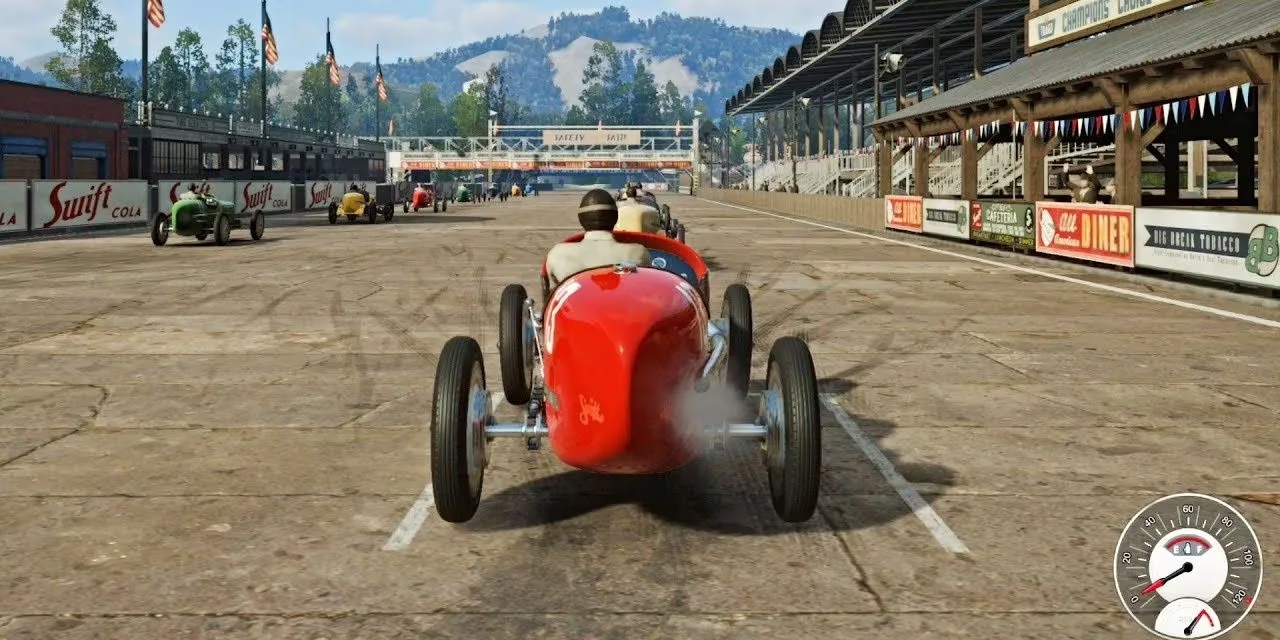
The mission starts normally: steal a rival's race car to sabotage it. But plot twist! Your boss's driver is injured, and guess who has to take the wheel? Yep. Suddenly, you're thrust into a full-blown, punishingly difficult vintage racing sim. You have to manage speed, drift on treacherous dirt tracks, avoid damaging your car, and actually win the race to progress the story. It's a jarring but incredibly fun detour that could have been its own standalone game. For players just wanting to get back to the Tommy gun action, it was a legendary roadblock (pun intended).
Red Dead Redemption 2 is a slow-burn epic about the death of the American frontier. Then, in Chapter 5, a botched ferry job leads to a shipwreck... and the gang washes up on the tropical island of Guarma. 🌴
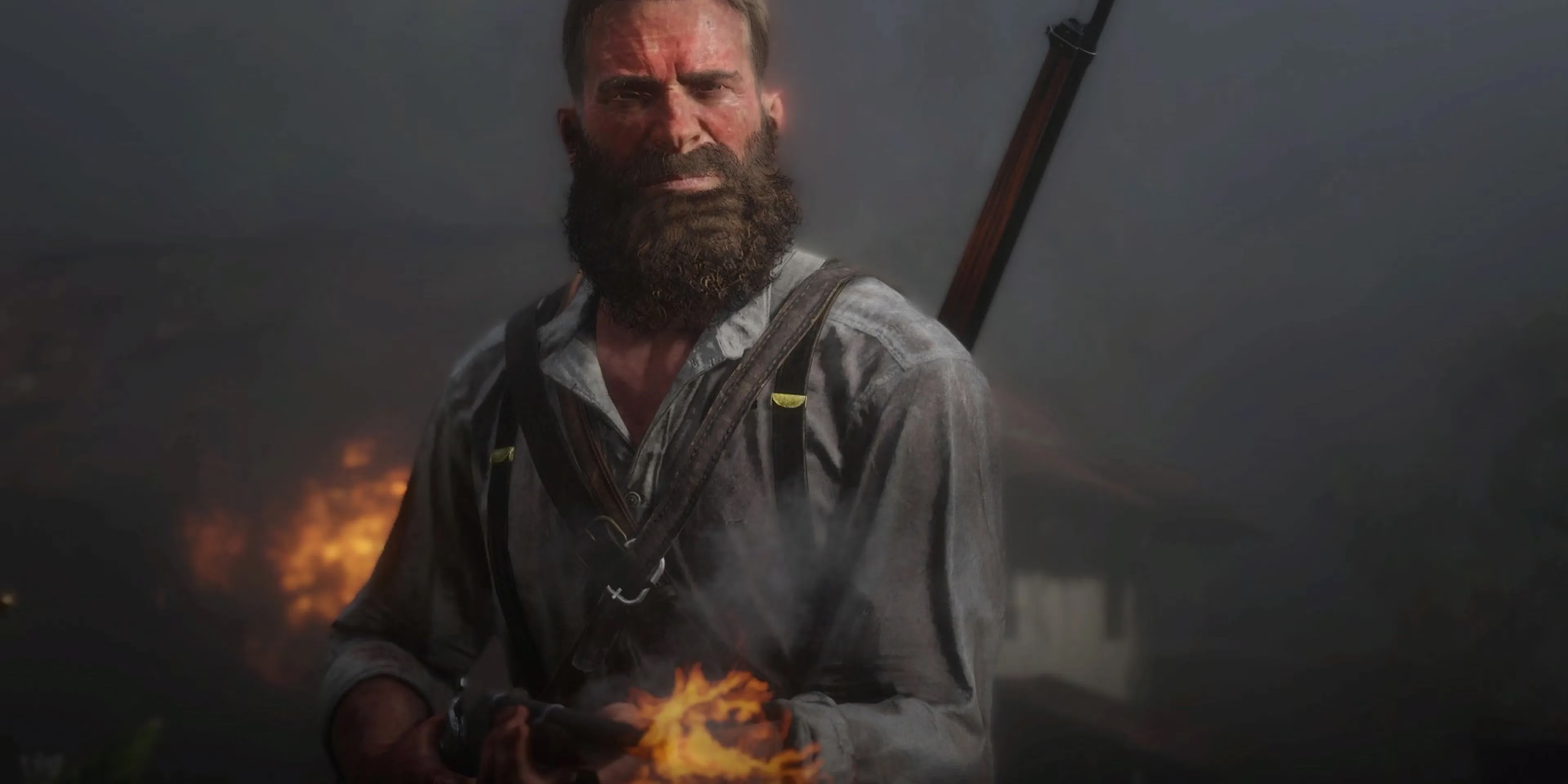
Gone are the snowy mountains and sprawling plains. In an instant, the game becomes a condensed Far Cry experience. Stranded on a lawless island, Arthur and a few gang members get caught in a rebellion against a cruel plantation owner, Alberto Fussar. The missions shift to guerrilla warfare: storming forts, freeing prisoners, and inciting revolution. The lush, vibrant setting, the charismatic rebel leader (Hercule Fontaine), and the first-person cutscenes all scream Far Cry 3. It's a bizarre, somewhat divisive, but undeniably memorable vacation from the main story's tone. You go from a dying outlaw to a tropical revolutionary in the span of a few hours.
Finally, let's swing back to something more... trippy. Marvel's Spider-Man is a joyful, web-slinging power fantasy across a stunningly realized New York City. Then you fight Scorpion. 🦂
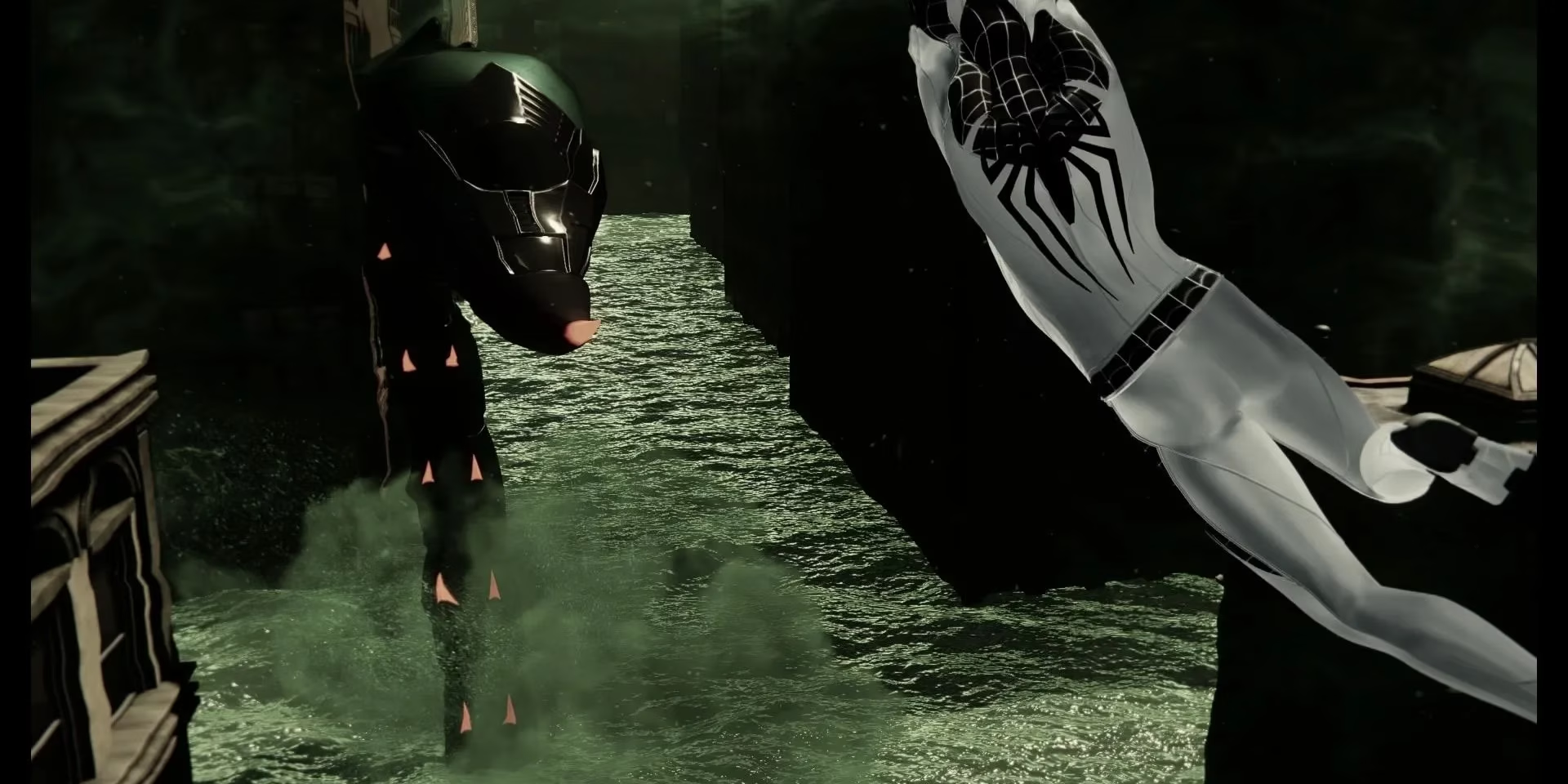
He hits you with a hallucinogenic venom, and the entire game becomes a psychedelic nightmare. The familiar NYC skyline drowns in a sickly green fluid. Skyscrapers become islands. Giant Scorpion tails rise from the depths like sea serpents. You navigate a disorienting dreamscape of floating buildings and surreal platforms, confronting manifestations of Peter Parker's inner guilt and flaws. The gameplay shifts to tense, disorienting traversal and puzzle-solving as you desperately search for an antidote. The vibe is eerily reminiscent of the Scarecrow sequences from Arkham Asylum, plunging our quippy hero into a personal hell. It's a stunning visual and gameplay departure that delves deep into the character's psyche.
Why Do Developers Do This?
So, why include these seemingly out-of-place levels? I think it's genius game design, honestly.
-
Prevents Monotony: Even the best gameplay loops can get stale after 20 hours. A sharp genre shift is a brilliant palette cleanser.
-
Showcases Versatility: It lets the devs flex their creative muscles and show they can master more than one style.
-
Enhances Narrative: Often, these shifts serve the story. Scarecrow's nightmares visualize fear. Spider-Man's trip externalizes his trauma. Ravenholm showcases the Combine's horrific bioweapons.
-
Creates Lasting Memories: Years later, you might forget a standard open-world quest, but you'll never forget the time your cowboy game turned into Far Cry or your superhero game turned into an art-house horror show.
These levels are more than just weird easter eggs; they're bold creative statements. They remind us that games are an art form capable of blending genres and emotions in ways no other medium can. So next time a game suddenly changes the rules on you, don't get frustrated—lean in! You might be about to experience one of its most unforgettable moments. What's your favorite "game-within-a-game" level? Let me know in the comments! 👇
Comments