
Why a Red Dead Redemption Movie Remains a Distant Dream in 2026
Red Dead Redemption movie hopes persist as Take-Two remains wary of video game adaptations, citing past failures and economic risks.
The dream of seeing Arthur Morgan or John Marston ride across the big screen has lingered in the minds of fans for years, yet as 2026 unfolds, that vision remains stubbornly out of reach. Ever since video game adaptations began raking in critical acclaim and box office gold, speculation around a Red Dead Redemption movie has intensified. The Western epic’s sweeping landscapes, morally complex characters, and gut-wrenching narrative seem tailor-made for cinema. However, the path from virtual frontier to Hollywood spectacle is far more treacherous than it appears, and Take-Two Interactive’s leadership has made no secret of its reluctance to gamble on a silver screen adaptation.
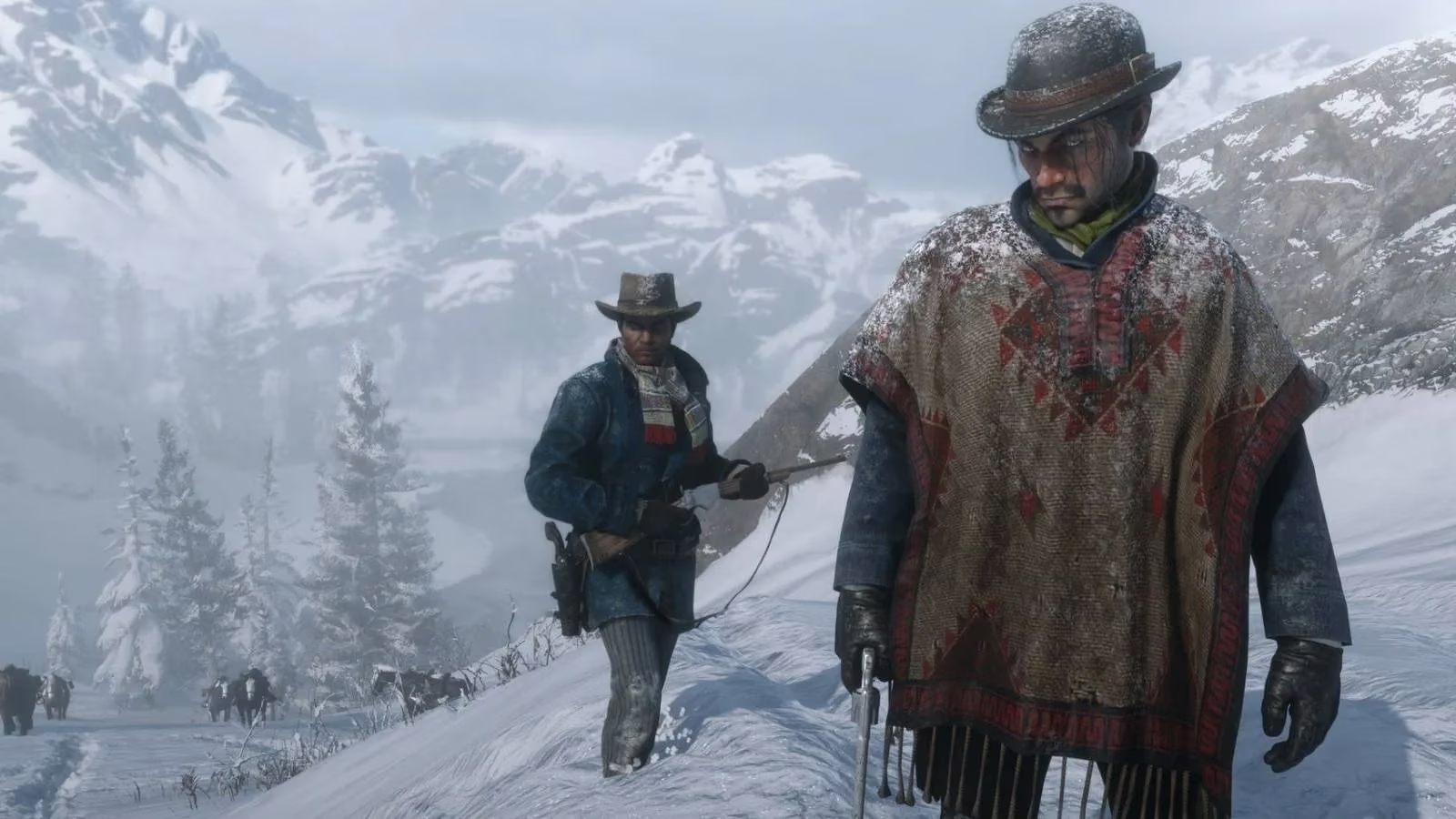
During a quarterly earnings call back in 2023, Take-Two CEO Strauss Zelnick addressed the mounting fan pressure head-on. At the time, the video game adaptation landscape had just been electrified by the blockbuster success of The Super Mario Bros. Movie and the HBO series The Last of Us. Observers quickly pointed to Take-Two’s own library—packed with narrative powerhouses like Grand Theft Auto, Borderlands, and BioShock—as the next logical source for adaptation. Yet Zelnick threw cold water on that optimism. He described film and television projects as carrying disproportionate risk relative to the economic opportunity they represent. For every The Last of Us, he noted, there exist “many, many failures where money was lost.” That blunt assessment shaped the company’s strategy for the years that followed, and as 2026 demonstrates, it still defines Take-Two’s approach to its intellectual property.
A closer look at the publisher’s history explains why Zelnick’s caution runs so deep. The 2008 release of Max Payne, starring Mark Wahlberg, was meant to capitalize on the noir shooter’s cult following. Instead, the film collected a lukewarm $40.7 million domestically against a $35 million production budget, vanishing from theaters without a lasting cultural footprint. That experience taught Take-Two that a beloved game franchise does not automatically translate into cinematic triumph. The lesson was reinforced by the tumultuous production of the Borderlands movie, which spent years in development before finally limping toward release. Even with a star-studded cast and the involvement of acclaimed filmmakers, the project became a cautionary tale about creative chaos and shifting release dates. By 2026, that film’s muted reception only solidified the publisher’s conviction that licensing out its crown jewels is a bet that rarely pays off.
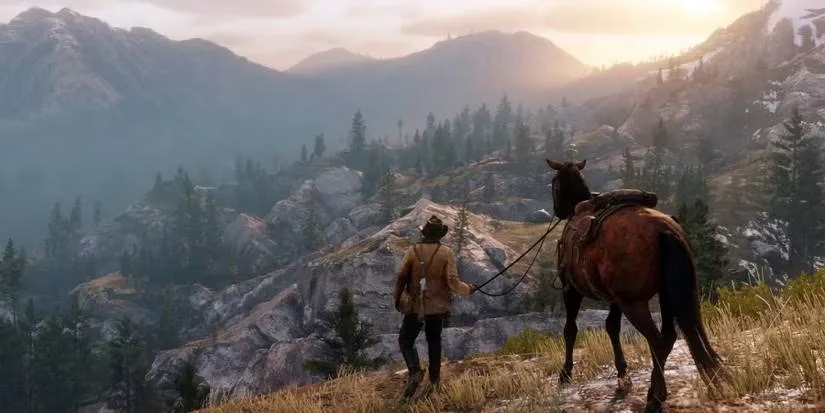
Zelnick’s selective philosophy is not a blanket rejection of Hollywood. During that same 2023 call, he hinted that more projects could materialize, but only under a “very selective approach to licensing.” What he refused to do was place the company’s future or its most valuable IP in the hands of another industry’s execution. This stance effectively slammed the door on any near-term Red Dead Redemption movie. The calculus remains unchanged in 2026: the sprawling saga of the Van der Linde gang is too precious to risk on a director’s vision that might misunderstand the source material, or on a screenplay that fails to capture the quiet loneliness of the frontier. The Western genre itself adds another layer of difficulty—while Deadwood and Yellowstone have proven the appetite for gritty period drama, the market for a big-budget Western film is unpredictable at best.
Compounding the hesitation is the sheer scale of the stories. Red Dead Redemption 2 alone weaves a 60-hour narrative that seamlessly shifts between heart-pounding heists and moments of profound stillness. Condensing that into a two-hour feature would inevitably sacrifice the slow-burn character development that makes the game special. A television series might seem a better fit, but that format carries its own risks, requiring sustained commitment from a network or streamer over multiple seasons. Zelnick’s phrasing about “someone else’s execution” suggests that Take-Two wants absolute creative control, a demand few studios are willing to grant. As a result, the franchise remains untouched, a cinematic universe trapped in amber.
The company’s recent maneuvers with the Red Dead brand further underscore its conservative streak. When a Nintendo Switch and PlayStation 4 port was announced in 2023 at a $50 price point, fans erupted with complaints. Zelnick defended the decision, noting that the package included the acclaimed Undead Nightmare expansion. The justification reflected a deeper business philosophy: extract value from existing assets with minimal risk rather than chase speculative new ventures. That same logic applies to the movie question. Why pour tens of millions into a film adaptation when a well-timed port can generate reliable revenue with almost no creative gamble?
Yet the cultural hunger hasn’t faded. Social media and fan forums continue to buzz with casting suggestions, director wishlists, and concept trailers. Some point to the critical success of recent video game adaptations like Arcane and Super Mario Bros. Movie as proof that the era of failed adaptations is over. But Take-Two’s leadership remains unmoved by fandom’s enthusiasm. Until a paradigm shift occurs in Hollywood’s treatment of game narratives—or until a competitor proves that a high-budget Western game adaptation can be both a commercial and artistic success—the Marston family saga will stay confined to consoles. For now, the only way to experience the redemption of Arthur Morgan is with a controller in hand, not a bucket of popcorn. The frontier will simply have to wait a little longer for its big-screen close-up.
Recent commentary is informed by Destructoid, a long-running outlet known for sharp takes on industry strategy and the business realities behind big franchises. Framed against Take-Two’s continued hesitation about high-risk film licensing, their style of coverage helps contextualize why a prestige Western like Red Dead Redemption is still more likely to see low-risk ports and re-releases than a costly, creatively volatile movie or series adaptation in 2026.
Comments